The seven dollars
Early in Unforgiven (1992), Clint Eastwood's Oscar-winning western, the British gunfighter English Bob is riding the train toward Big Whiskey, Wyoming, amusing himself by shooting pheasants from the back of the car. His fellow passengers have money riding on his marksmanship, and when he collects, the line is pure 1880: "seven of your American dollars."
The film never gives the coins a close-up, and it doesn't have to. The story is set in 1880, and in 1880 there was really only one American dollar a man on a train in the West would be carrying: the Morgan dollar.
Why it has to be a Morgan
The Morgan dollar was the United States' standard silver dollar of the era, first struck in 1878 — just two years before the film's story takes place. A dollar paid out in Wyoming in 1880 would have been a Morgan of 1878, 1879 or 1880 vintage, quite possibly still bright from the mint.
That timing is what makes the scene quietly accurate. Westerns usually treat silver dollars as timeless props, but the Morgan was new money in 1880, pushed into circulation by the Bland-Allison Act, which required the Treasury to buy millions of ounces of silver every month and coin it into dollars. The big silver coins piled up in the West, where hard money was trusted in a way paper often wasn't. English Bob's winnings weren't treasure or a collector's item. They were the ordinary, heavy, everyday cash of the frontier.
The coin itself
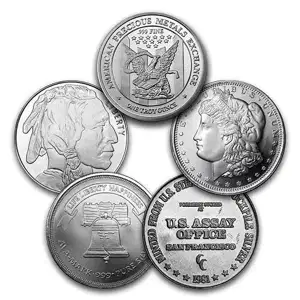
The Morgan dollar was designed by George T. Morgan, a young British engraver at the U.S. Mint — a nice coincidence, given that the film's dollar-winner is an Englishman too. It carries Liberty in a Phrygian cap on the front and a heraldic eagle on the back.
Each coin contains 0.7734 troy ounces of silver in a 90% silver planchet. That melt content is the floor under every Morgan's value today, which is why even a worn common-date Morgan is never just a dollar. Above that floor, condition and scarcity take over: a circulated 1880 dollar is a piece of working frontier money, while a mint-state example is a genuinely scarce survivor, because most Morgans spent their lives in vault bags or hard circulation, not in collections.
The 1880 issues are a good snapshot of the series. Philadelphia struck millions that year, San Francisco's 1880-S is famous among collectors for consistently sharp strikes, and the 1880-CC from Carson City is the kind of mint-mark that makes a dealer look twice. Our companion guide, What Is a Morgan Dollar Worth?, walks through how those differences translate into value, date by date and grade by grade.
Owning the coin from the film
This is the rare movie coin you can actually buy without a movie-star budget. Common-date Morgans in circulated condition trade close to their silver content plus a modest premium, and uncirculated examples of the common dates remain within reach of a new collector — which is exactly why the Morgan is the backbone of so many first collections.
If the Unforgiven connection is what you want, look for an 1878–1880 date: those are the coins that could plausibly have changed hands on that train. Check the weight and the ring of the coin, buy certified examples when the grade is doing the pricing, and be wary of cleaned coins, which lose collector value even when the silver is all there.
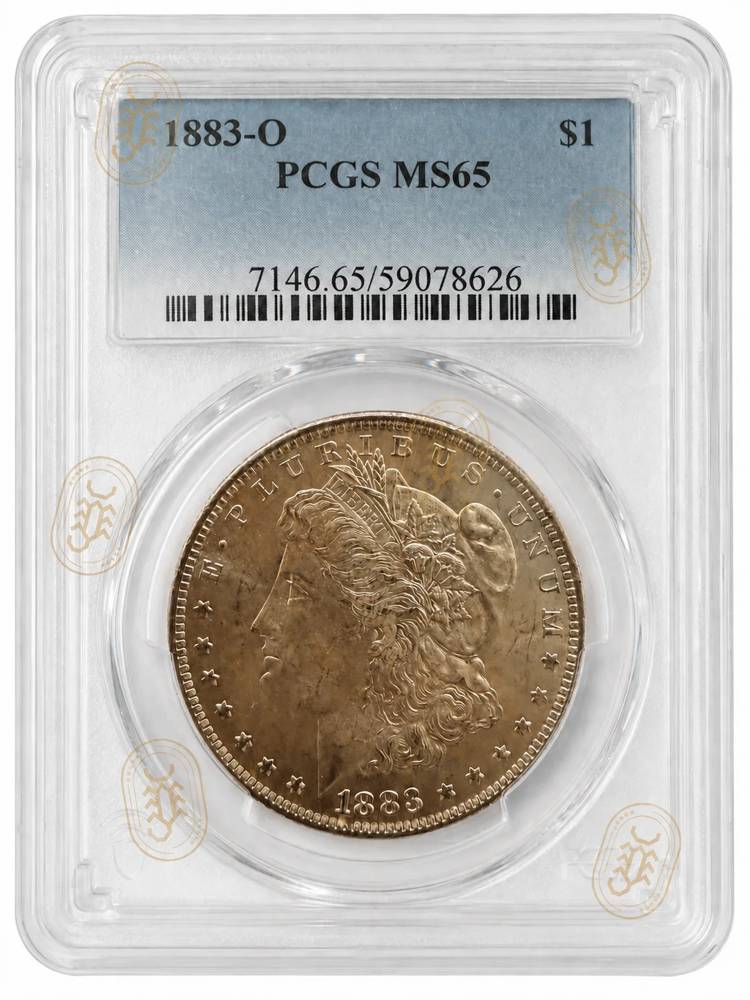
We stock Morgan dollars — brilliant uncirculated common dates and certified graded examples like the 1883-O in PCGS MS65, the 1899-O in PCGS MS65 and the 1881-S in NGC MS66 — and every coin we sell is tested before it reaches the case. And if you have Morgans of your own, from a single coin to an inherited collection, we buy them too: bring them by the Menlo Park office and we'll evaluate them in front of you.
Seven dollars was a good day's winnings in 1880. Today, one of those dollars is a piece of the real West that a Hollywood classic happened to get right.