One of the first questions every precious-metals buyer faces is deceptively simple: should you buy gold in the form of coins, or in the form of bars? Both are investment-grade gold, both track the spot price, and both are easy to sell — but the right answer depends on how much you're buying, how you plan to store it, and what you value most as an investor.
Gold Bars: Maximum Metal for Your Money
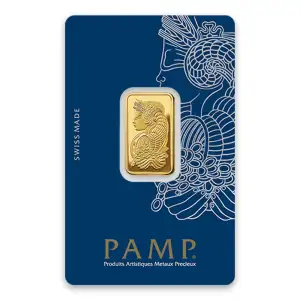
The biggest argument for bars is price. Because a bar is simply a stamped or poured slab of gold, manufacturing costs are lower than for a detailed, minted coin. That means bars generally sell at a smaller premium over spot price — and the larger the bar, the smaller that premium tends to be. If your goal is to own the most gold possible per dollar spent, bars usually win on paper.
Bars are also practical. Their uniform rectangular shapes stack neatly, making them easy to organize in a home safe or a storage box. A single 1-kilogram bar holds more than 32 troy ounces in a footprint not much bigger than a smartphone.
The tradeoff: a bar is pure commodity. It carries no collectible or numismatic upside. Its value will rise and fall almost exactly with the spot price of gold — it won't gain a premium because a series ended, because demand for a particular design surged, or because it was certified in a rare grade. You are buying metal weight, nothing more and nothing less.
Gold Coins: Recognition, Flexibility, and Extra Upside
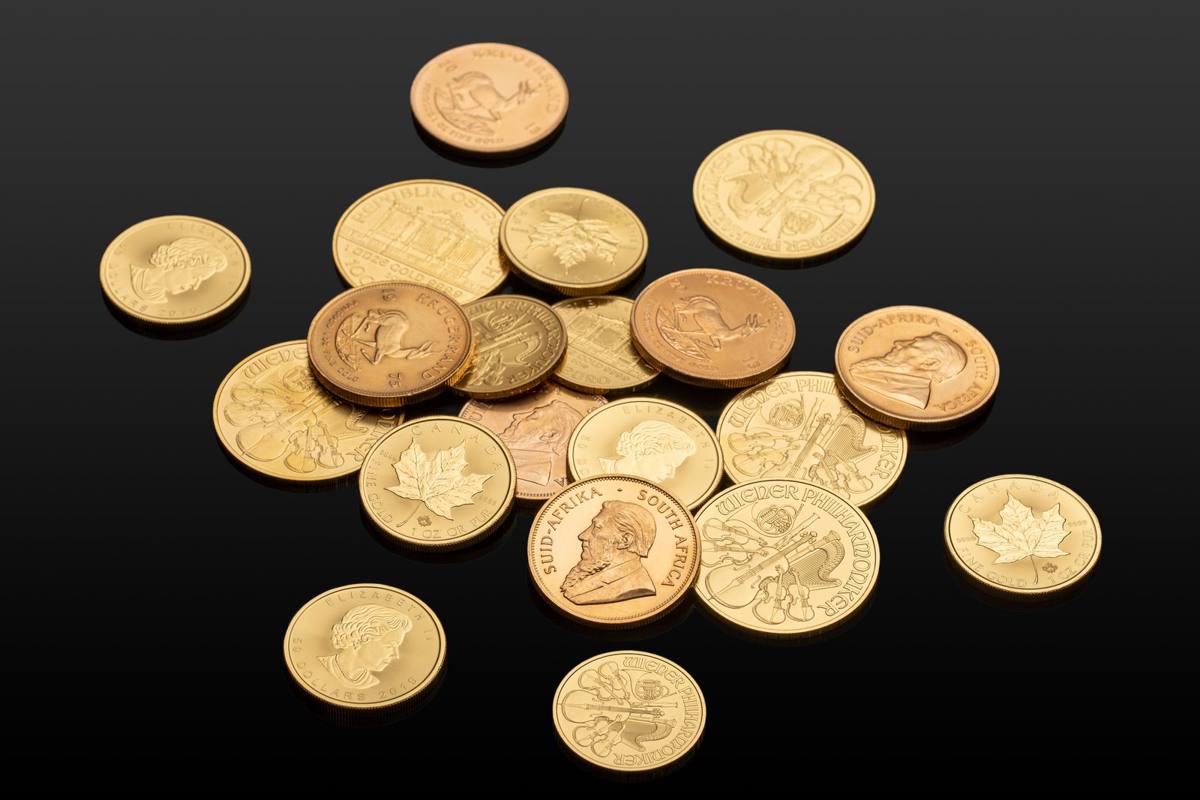
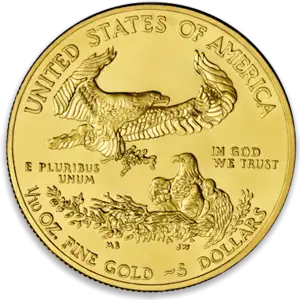
Gold bullion coins are struck by sovereign mints and carry a legal-tender face value. That official backing is part of why they're the default choice for many investors: a widely recognized coin is fast to verify and easy to sell anywhere in the world, which makes coins exceptionally liquid.
Coins also open a door that bars don't: numismatic potential. Some coin designs are produced as part of multi-year series, and collectors chase those sets — which can push certain coins to sell well above what their gold content alone would justify. Even common bullion coins are more likely than bars to carry a resale premium tied to demand for the design itself.
Coins come with tradeoffs too. Because they cost more to mint, they usually carry higher premiums than equivalent-weight bars. And most gold coins are sold in smaller denominations — the classic 1-ounce coin being the standard — while bars scale up to a kilogram and beyond, where the per-ounce savings are largest.
One more advantage worth noting: many sovereign coins enjoy favorable tax or reporting treatment in certain jurisdictions, a perk that generic private-mint bars don't always share. (Rules vary by location, so check yours.)
Coins vs. Bars: Which Should You Choose?
There's no universal winner — but there are clear guidelines:
- Buying smaller amounts? Coins tend to be the better call. They're easier to liquidate in small increments, widely recognized, and carry security features that make verification simple.
- Buying 10 ounces or more at once? The math starts to favor larger bars. The smaller spread on a kilo bar or a set of large bars can mean noticeably more gold for the same spend.
- Want collectible upside? Coins give you that lottery ticket; bars don't.
- Want the cheapest ounces? Bars, especially large ones.
Many experienced investors don't choose at all — they hold both. Coins for liquidity and flexibility, bars for efficient bulk storage of wealth. But if you're starting with a modest budget, a well-known gold coin is the simplest, safest first step into physical gold.